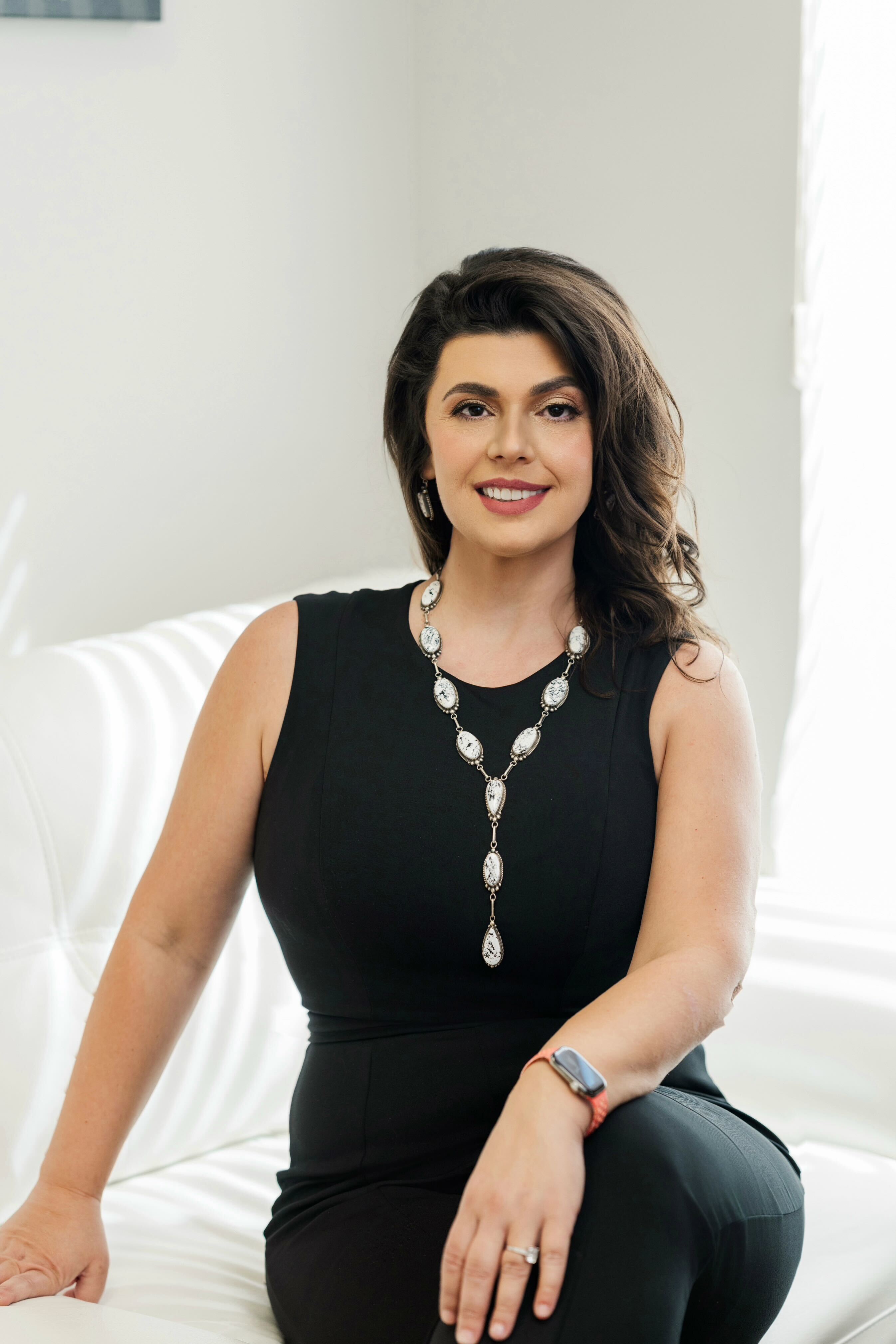
Quick answer: chewing on one side, cutting food into tiny pieces, and working around the tooth you know is failing is not a strategy — it is a countdown. Bone recedes wherever a tooth is lost, a tooth that is restorable today may need extraction later, and treating one failing tooth costs less than treating the neighbors it takes with it. The good news is the pathway is clear: a single implant, a bridge, or a full arch, matched to how far the problem has gone. Here in Trinity, FL, Dr. Xhoana Gjelaj maps that pathway for you in one visit.
The Pattern
It usually starts small and reasonable. A back tooth starts to bother you, so you start chewing on the other side — just for now, just until it is less busy at work, just until after the trip. "Just for now" becomes the default. You cut your food smaller. You stop ordering the things that require real chewing. You develop a small, private awareness of which tooth is compromised and you route around it the way you route around a pothole.
Then it starts to show up at work. You are mid-presentation and a flare lands at the worst possible moment — the sharp throb that makes you lose your train of thought and grip the lectern. You cancel a client dinner. You start scheduling the important conversations for the windows when you know the tooth will be quiet, which is no way to run a calendar. None of this is weakness. It is the slow cost of postponing a problem that compounds the longer you carry it.
What Waiting Costs
This is not fear-mongering; it is mechanics. A tooth is not just a chewing surface — its root keeps the surrounding bone alive. Lose the tooth and the bone in that spot begins to resorb within months, and continues for life. That matters because the neighboring teeth lose their lateral support and start to drift into the gap, and the opposing tooth, with nothing to bite against, super-erupts out of its socket. One missing tooth, left alone, tends to take others with it over the following years.
There is also the window problem. A tooth that is restorable today — a crack that can be crowned, a nerve that can be managed — may pass the point of salvage if it flares again or fractures further. The same tooth that needed a crown in February can need an extraction and an implant by the following February, at several times the cost. Treating one failing tooth on your timeline costs less than treating the neighbors it takes with it on an emergency timeline. The extractions page covers what happens when a tooth truly cannot be saved.
The Pathway
Treatment is matched to how far the problem has progressed, not applied as one-size-fits-all.
- One tooth failing or missing. A single dental implant replaces the root and the crown without touching the teeth on either side — the most conservative option when a single tooth is the issue. A complete single implant is approximately $5,500, with the exact figure set after diagnostics and itemized in writing.
- A run of failing teeth in a row. An implant-supported bridge spans the gap anchored by implants at each end, avoiding a removable partial denture.
- A full arch that has deteriorated. When the whole arch is compromised, a fixed full arch (All-on-4) replaces the entire row in one planned procedure — from $25,000 per arch.
Across every option the rule is the same: the exact cost is set after diagnostics and given to you itemized, in writing, with financing subject to lender approval and current terms. The full pricing breakdown is on the implant cost page, and the dental implants page covers the procedures themselves.
One Visit, a Real Answer
The Signature Consultation exists for exactly this — a person who wants a straight answer, not a sales process. It is a 90-minute clinical visit that includes a CBCT 3D scan, full X-rays, and an intraoral scan, and it ends with a written treatment plan: which teeth can be saved, which cannot, what each option costs, and how long it takes.
You leave with the scope and the cost on paper, so the decision is yours to make on your timeline with real numbers — not a conversation engineered to close today. The consultation is $300, credited in full toward your treatment within 30 days. If you have been dreading the procedure itself, the recovery is usually milder than people expect — the honest day-by-day is on the do dental implants hurt page.
Frequently Asked Questions
How do I know if a tooth can be saved?
Only a clinical exam with imaging can say for certain. A tooth with a restorable nerve or a crownable crack can often be saved; a tooth that is split below the gumline, or that has lost too much surrounding bone, cannot. The CBCT scan and exam at the Signature Consultation give you a definitive answer and a written plan, not a guess.
Can everything be done under sedation in fewer visits?
Yes — sedation is available for patients who want longer, more complex work completed in fewer visits, with a board-certified anesthesiologist managing the anesthesia throughout. How much can be combined into a single visit depends on the scope and your health, both assessed at the consultation.
What does a single implant cost?
A complete single implant is approximately $5,500 — implant, abutment, and crown. Your exact figure is set after the CBCT scan and itemized in writing, with financing subject to lender approval and current terms. See the implant cost page for the full breakdown.
How long does treatment take start to finish?
A straightforward single implant is typically a few months from placement to final crown, because the implant needs to fuse with the bone. A full-arch case can carry a same-day temporary set of teeth, with the final prosthesis a few months later. Your written plan includes the timeline specific to your case.
Dr. Xhoana Gjelaj, DMD, MAGD, DABOI/ID, DICOI, FAAID is a board-certified implantologist in Trinity, FL with more than 10,000 implants placed. Ready for a written plan with real numbers? Reserve a $300 Signature Consultation — 90-minute clinical visit with CBCT 3D scan, full X-rays, intraoral scan, and a written treatment plan, credited toward your treatment within 30 days — or call (727) 228-6846.