Quick answer: an implant dentist is any dentist who places or restores dental implants. The term is not regulated, because implant dentistry is not one of the specialties recognized by the American Dental Association. A general dentist, a periodontist, an oral surgeon and a prosthodontist can all legitimately call themselves implant dentists. What separates them is training, volume, and whether an outside board has examined their work. Those are the three things to look at.
Patients often assume "implant dentist" is a title someone earned, the way "orthodontist" is. It is not, and the gap between the dentist who placed twelve implants last year and the one who placed several hundred is invisible on a sign. This article explains who does implant work, what the credentials actually require, and the questions that reveal the difference.
Who Places Dental Implants
Four kinds of clinicians place implants in the United States:
- General dentists with post-graduate implant training. This is the largest group and the widest range of experience, from a single weekend course to thousands of hours and board certification.
- Periodontists, specialists in the gums and supporting bone, whose residency includes implant surgery.
- Oral and maxillofacial surgeons, whose residency covers implant placement alongside extractions, jaw surgery and trauma.
- Prosthodontists, specialists in restoring and replacing teeth, who design the crowns and bridges that implants carry and increasingly place implants as well.
In the traditional model the surgeon places the implant and a restorative dentist makes the tooth, in different offices. In the one-roof model a single clinician does both. Neither is wrong, but the one-roof model removes the hand-off, and the hand-off is where misaligned angles, mismatched components and finger-pointing live.
Why the Title Is Unregulated and What That Means for You
Because the ADA does not recognize implant dentistry as a specialty, any licensed dentist may offer implants. State dental boards, including Florida's, regulate how credentials and specialties may be advertised, which is one reason a careful office names the certifying board behind a claim rather than using a vague title. The practical consequence for you is simple: the word "implant" in a practice name or a Google listing tells you nothing about training. The credentials do.
The Credentials, and What Each One Requires
DABOI/ID — Diplomate, American Board of Oral Implantology/Implant Dentistry. This is the board certification in implant dentistry. Candidates must document years of implant practice, pass a written examination, and then pass an oral examination in which they defend their own treated cases before examiners. Diplomates are listed publicly at aboi.org. When a practice says "board-certified in implant dentistry," this is the board it should be referring to.
FAAID — Fellow, American Academy of Implant Dentistry. Fellowship requires a minimum number of hours of implant-specific continuing education, documented cases, and a credentialing examination. Fellows are listed at aaid-implant.org.
DICOI — Diplomate, International Congress of Oral Implantologists. The ICOI is one of the largest implant organizations in the world. Diplomate status requires documented experience, continuing education and case submissions reviewed by the organization.
MAGD — Mastership, Academy of General Dentistry. Not implant-specific, but a meaningful signal about the whole dentist. Mastership requires 1,100 hours of continuing education, including 400 hours of hands-on courses, across every discipline of dentistry.
Fewer than 1% of U.S. dentists hold the combination of MAGD Mastership and dual board certification in implant dentistry (DABOI/ID and DICOI). I hold all four designations, and the detail on each is on the Meet the Doctor page. I mention it not as a boast but because verifiability is the point: every one of these can be checked by a patient in five minutes.
Training Beyond the Letters
Credentials are examinations; training is where the judgment comes from. The institutes that shaped how I plan implant cases are the Misch International Implant Institute (surgical and prosthetic implant protocols), The Pankey Institute and The Dawson Academy (occlusion, which is how the bite loads the implants) and Spear Education (treatment planning and esthetics). Together that is more than 2,000 hours of post-graduate study. When you interview an implant dentist, ask where they trained in implants specifically, not just where they went to dental school.
Questions That Reveal the Difference
- "How many implants have you placed, and how many full arches?" A confident answer with real numbers is a good sign. At Trinity Dental Arts the count is over 10,000 implants placed across more than 20 years.
- "Will you place the implant and also make the tooth?" The one-roof answer is yes.
- "Do you take a 3D CBCT scan and plan the implant position on it before surgery?" The answer should be yes without hesitation; the technology page shows how we do it.
- "Who makes the crown or the arch, and where?" Ask whether there is an in-house laboratory and what happens when a provisional tooth breaks.
- "Who administers and monitors sedation?" For full-arch surgery we use IV sedation administered by the board-certified anesthesiologist on our staff; the options are on the sedation page.
- "What happens if an implant fails to integrate?" Every honest implant dentist has had one. You want to hear a clear policy, not a promise that it never happens.
- "Can I see before-and-after photos of your own patients?" Real cases from the office, not stock photography. Ours are on the results page.
- "Is the fee published and itemized?" Our cost page lists the complete fees so you can compare like with like.
Should You See a Specialist Instead?
For a single implant in good bone, a well-trained general dentist with board certification in implant dentistry and an oral surgeon will produce comparable results; the restorative planning matters as much as the surgery. Complex situations change the calculus: severe bone loss, medical conditions that affect healing, jaw reconstruction after trauma or cancer. In those cases the right answer may be a team that includes a surgeon or a hospital setting, and a responsible implant dentist will tell you so at the consultation rather than after. Part of what board certification tests is knowing where the edge of your competence is.
Frequently Asked Questions
Is an implant dentist a specialist?
Not by title. Implant dentistry is not an ADA-recognized specialty, so "implant dentist" describes what a dentist does, not a credential. Board certification through the American Board of Oral Implantology/Implant Dentistry (DABOI/ID) is the examination-based credential in implant dentistry.
What does board-certified implant dentist mean?
It means the dentist has passed the written and oral examinations of the American Board of Oral Implantology/Implant Dentistry, including the defense of their own treated cases before examiners, and holds Diplomate status (DABOI/ID). Diplomates are listed publicly at aboi.org.
Should a general dentist or an oral surgeon place my implant?
Both can, and results depend more on the individual clinician's training, volume and planning than on the title. Ask about board certification, case numbers, 3D planning and who restores the implant. Complex reconstructions may call for a surgical team, and a good implant dentist will say so.
What is the difference between FAAID, DABOI/ID and DICOI?
FAAID is Fellowship in the American Academy of Implant Dentistry, earned through implant education, documented cases and an examination. DABOI/ID is board certification in implant dentistry through the American Board of Oral Implantology/Implant Dentistry, which includes written and oral examinations and the defense of treated cases. DICOI is Diplomate status with the International Congress of Oral Implantologists. Dr. Gjelaj holds all three plus MAGD Mastership.
How many implants should an implant dentist have placed?
There is no official threshold, but experience with your specific procedure matters: ask about full-arch cases if you need a full arch. Trinity Dental Arts has placed more than 10,000 implants over 20+ years.
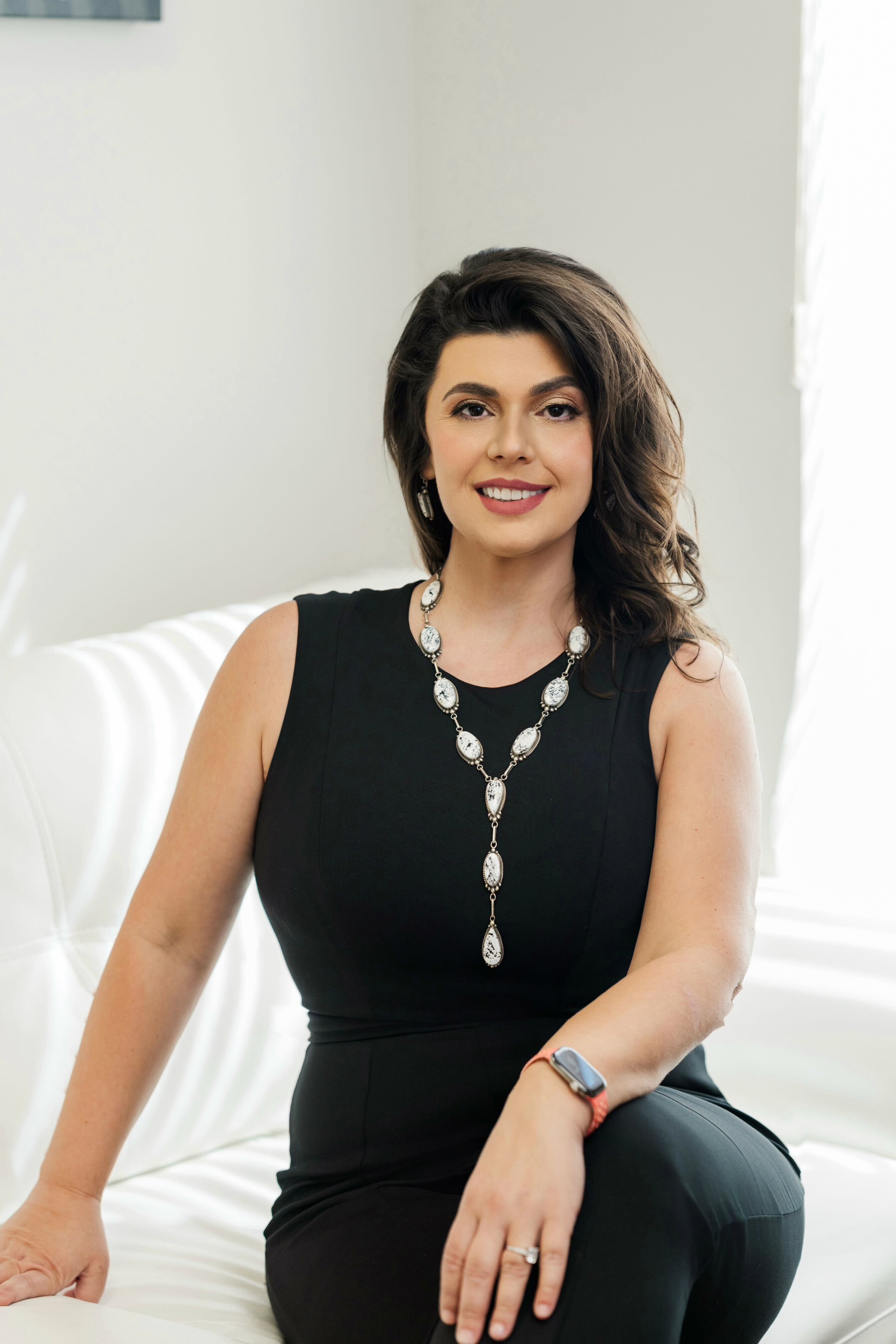
Dr. Xhoana Gjelaj, DMD, MAGD, DABOI/ID, DICOI, FAAID is a board-certified implantologist and the owner of Trinity Dental Arts in Trinity, FL. Reserve a $300 Signature Consultation, a 90-minute clinical visit with 3D imaging and a written plan, credited toward treatment begun within 30 days, or call (727) 228-6846.